
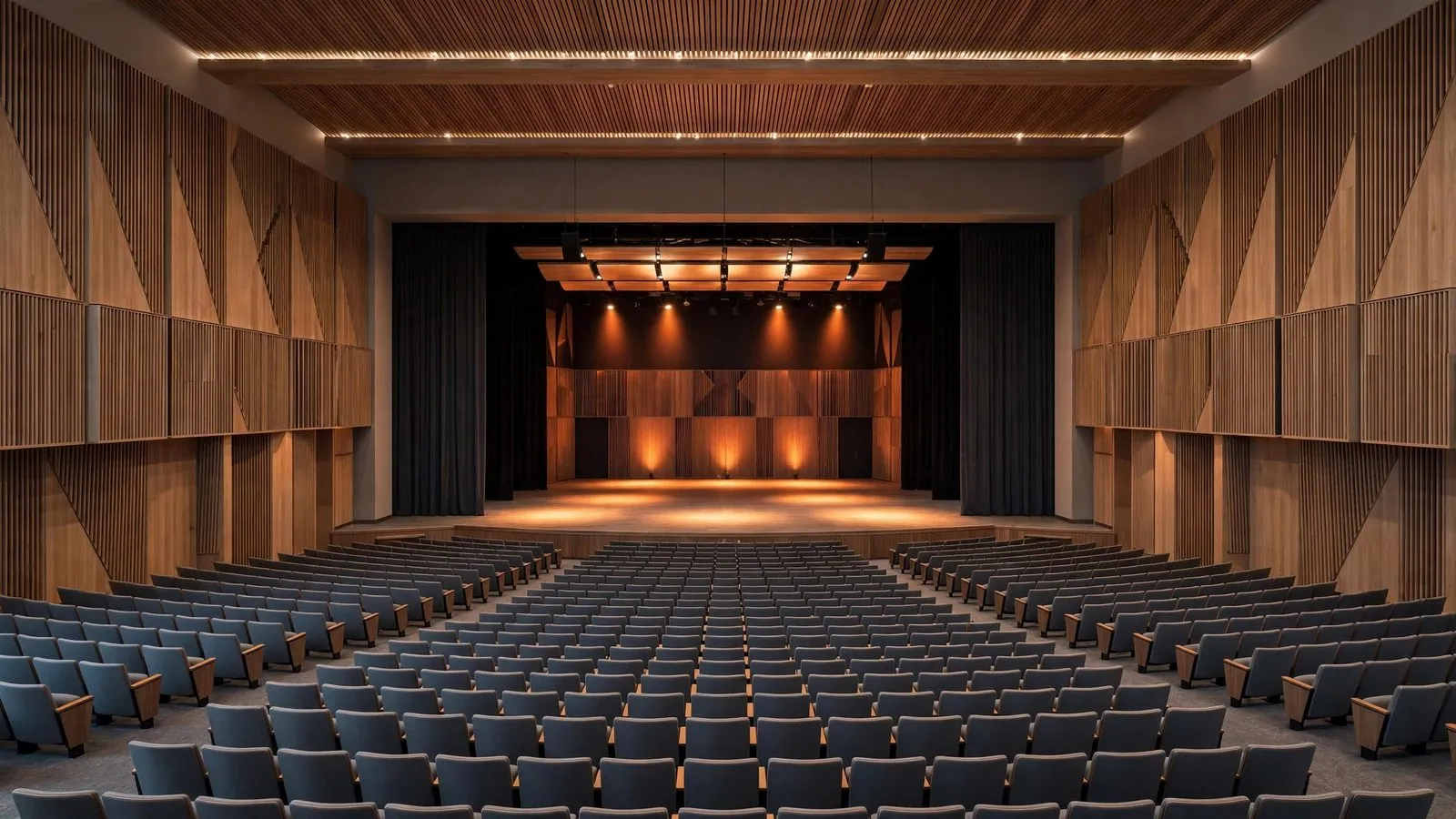
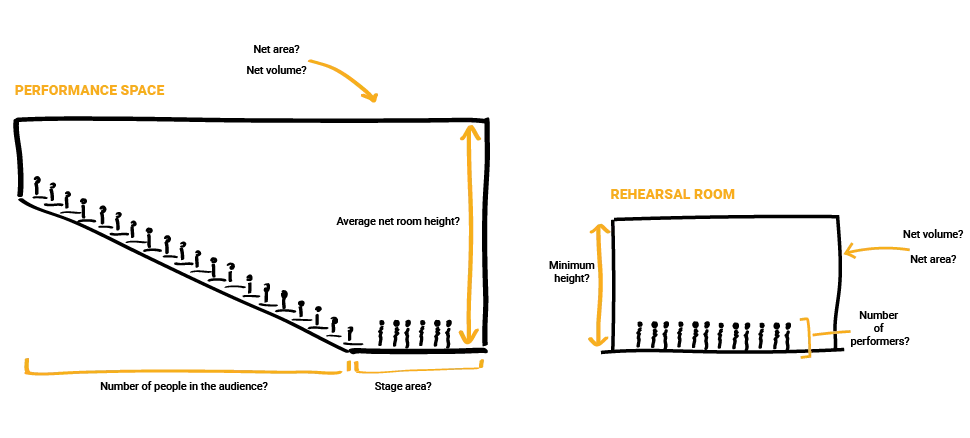
If you are involved in the acoustic design of a music space, you might have to think about the type of music played inside and the ensemble size.
This way, you will be able to plan the basic geometries of the space and avoid the music sounding too loud or too quiet. Acoustic calculations and modelling can then be used to fine-tune the design and achieve the desired room acoustic criteria.
The Norwegian Standard 8178:2014 provides guidance and criteria for rooms used for music rehearsal and performances. It can not only be used for new build and refurbishment, but also to assess “the suitability of existing spaces for different musical purposes”.
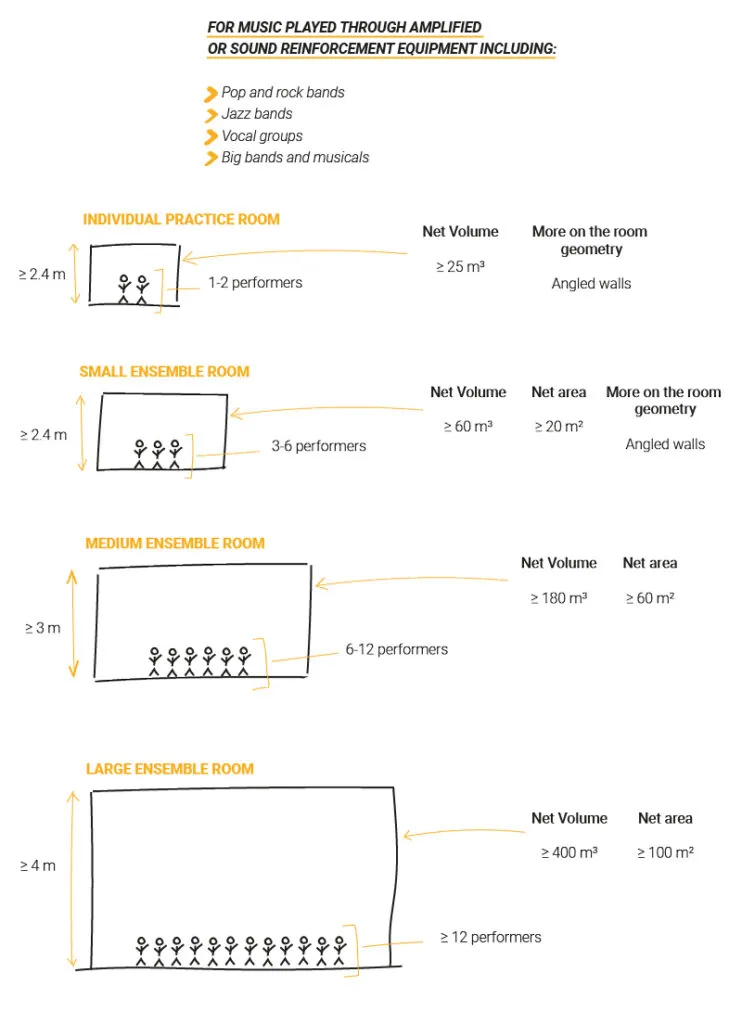
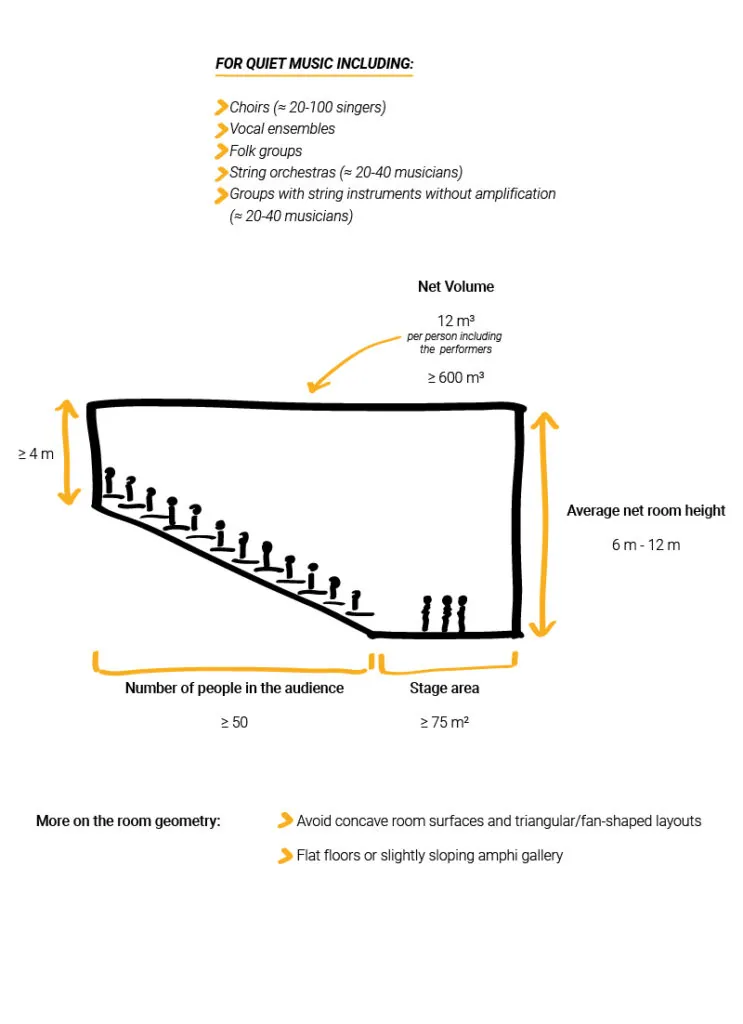
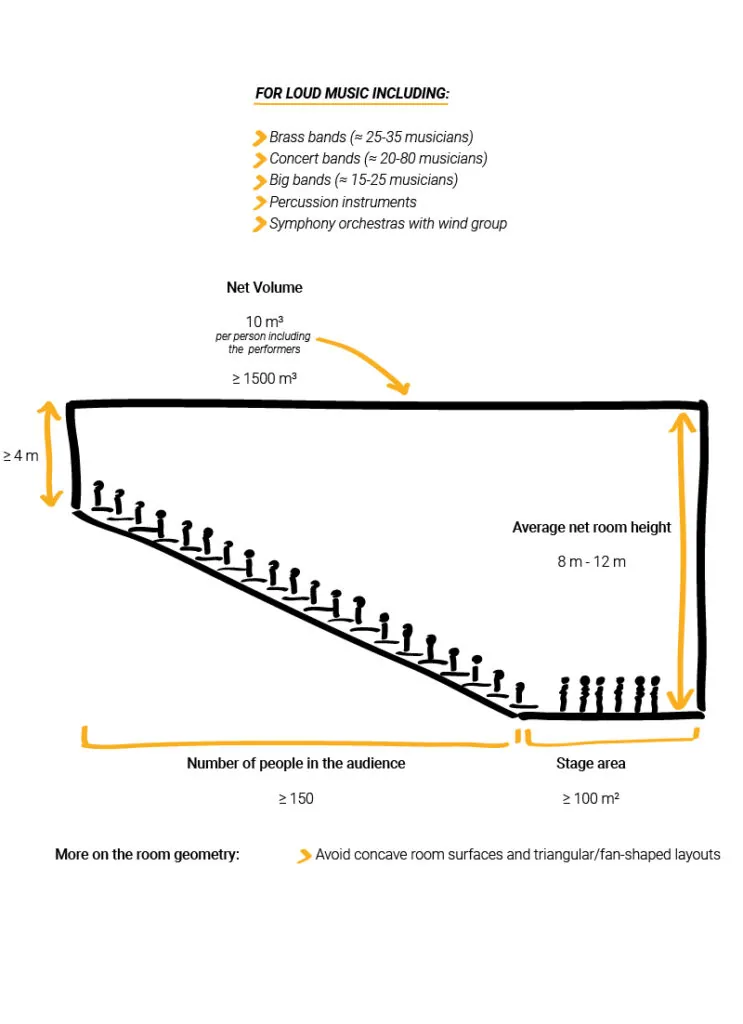
This series of slides summarise the basic geometries recommended for different types of music, whether the room is for rehearsal or performances.
Enjoy the read!
(See at the end the references used to confirm the concepts)
Start with the music, not the room
A string quartet and a drum kit need opposite things from a room. Quiet acoustic music wants liveliness and support, so players can hear each other and the sound blooms. Loud or amplified music needs control, so volume stays manageable and the mix stays clear. Get this backwards and no amount of treatment fully fixes it.
Ensemble size matters as much as style. Each additional musician adds sound power, so the room volume has to grow with the group. Loud ensembles need generous cubic volume per player, while quiet acoustic groups benefit from a tighter room where early reflections help the ensemble hear itself.
Geometry does the heavy lifting
Before any product is specified, the shape of the room sets the outcome. Parallel hard walls invite flutter echo. Low flat ceilings throw harsh early reflections at the players. Slightly splayed walls, a shaped or absorptive ceiling, and diffusion at the rear wall solve problems that panels alone cannot. The slides below walk through recommended starting geometries for rehearsal and performance rooms across music types.
Rehearsal rooms – Acoustic, quiet music
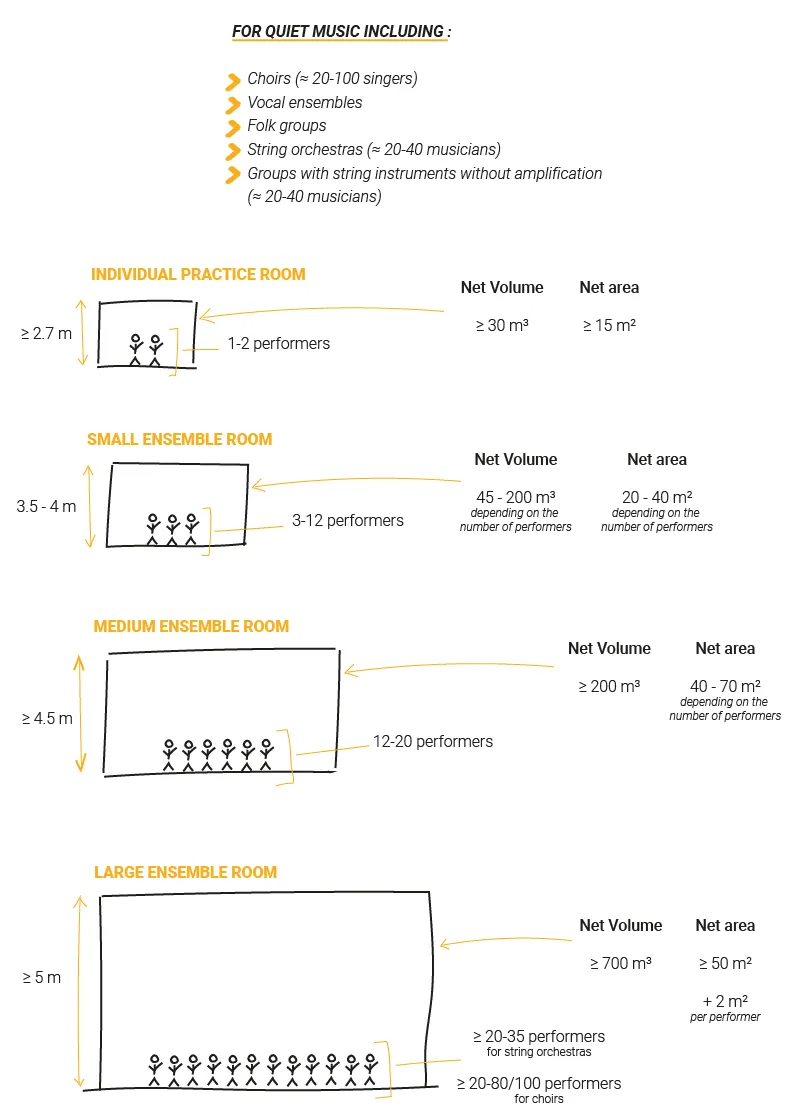
Rehearsal rooms – Loud acoustic music
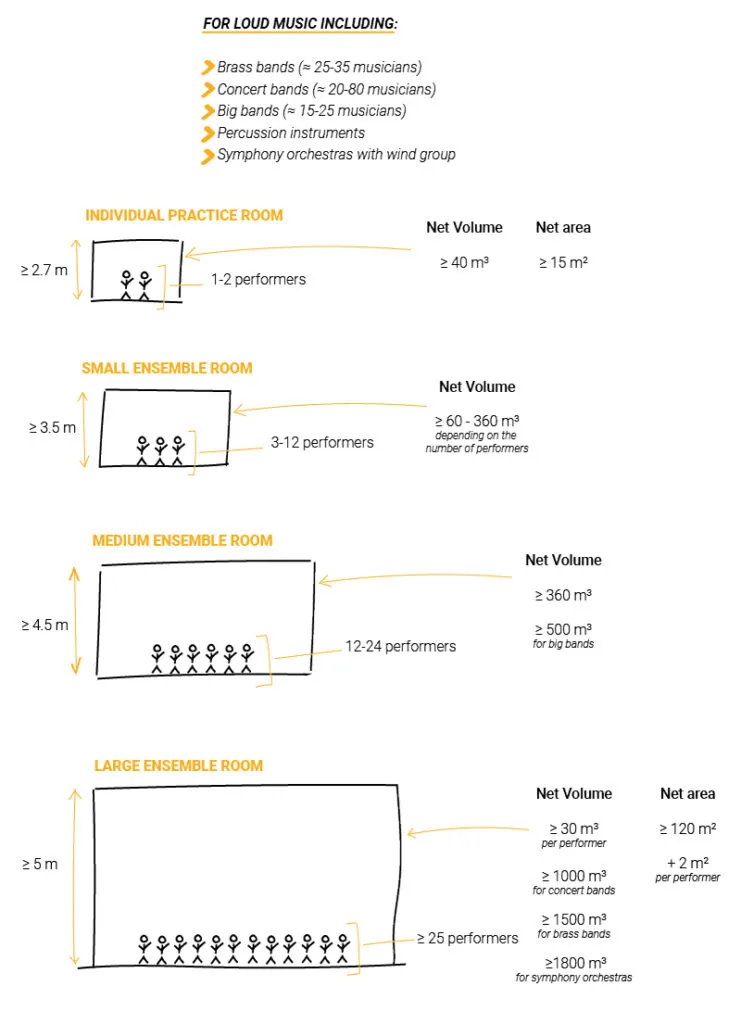
Rehearsal rooms – Amplified music
Performance spaces – Acoustic quiet music
Performance spaces – Acoustic loud music
From geometry to treatment
Once the shape is right, treatment fine-tunes it. Absorption tames excess reverberation, diffusion keeps the sound even without making the room feel dead, and bass control keeps low frequencies tight. The right mix depends on the music, the players, and how the room will actually be used, which is why modeling the design before committing to construction pays for itself.